

Every Piece Matters
When I go out for a free solo ice climb like the one in episode 13, I don’t just grab gear, I build a system. Every single piece I take has a purpose, and more importantly, it integrates into how I move. This isn’t about having more gear, it’s about having the right gear, and trusting it completely.
What I’ll do here is walk you through everything I use, starting with the approach, then preparation, and finally what I actually wear and carry on the route.
1. Approach Gear / Setting Up Warmth and Efficiency
The approach to the climb can play a key factor in determining how well your climb is going to go. One of the biggest mistakes I see is people approaching in the same boots they climb in. That just doesn’t work for me.
I always approach with a different pair of footwear, suitable for the approach. For this climb, I used the Scarpa Ribelle Tech 3. It’s a surprisingly warm shoe if you keep moving, I’ve even taken it up a 6000m peak in winter, and for an approach where you’re constantly in motion, it’s exactly what you want. It’s waterproof, moves well in and out of snow, and most importantly, it keeps things efficient without overheating your feet.
Because if you sweat into your boots during the approach, you’re basically setting yourself up for cold feet, or worse, frostbite, once you stop moving.
That’s why I do the approach in thin merino socks and also bring a second pair of thick wool socks. When I arrive at the base, I switch into a completely dry setup. Dry feet are warm feet, and warm feet are non-negotiable.
For movement, I use the LEKI Sky Solo poles. What I like about them is that they sit right between a ski pole and a trail running pole. They’re carbon, super light, foldable, and have a proper snow basket so they don’t sink in. For alpine approaches, that combination just works. You can even stash them in your pack if needed and take them along for the descent.
2. Preparation / Getting Into the Right State
Before I step onto the ice, I take time to prepare, physically and mentally. I sit down on a Thermarest Z-Lite. I like it because it’s indestructible. With crampons and sharp tools around, inflatable mats just don’t make sense. This one, you can accidentally step on it, throw it around, it just works.
I bring wireless Beats headphones because they’ve proven themselves in cold conditions, even on expeditions like Everest. The battery stays protected, and since it’s one connected piece, there’s less risk of losing anything. Music-wise, I choose something that keeps me in a very specific state: calm, but not sleepy, focused but not stressed. Something that activates me without pushing me over the edge. That balance is important.
I also bring an original Thermos with hot fruit tea. From my experience, nothing keeps liquids warm as reliably. Even though I once pushed it to the limit on a Denali winter climb in extreme cold, in normal alpine conditions it’s still the best option. Having something warm to drink is essential, especially in ice climbing where you often alternate between movement and standing still.
And then there’s the stretch band. I use a medium-strength pull-up & dip band to activate my shoulders. Ice climbing is very demanding, and I think warming up properly is something that’s often overlooked in this discipline. For me, it’s part of reducing injury risk and just feeling ready before I commit.
3. On the Route / Worn Gear & System Integration
Once I step onto the route, everything I wear needs to function as one system.
Base Layer
I start with tight-fitting merino underwear, followed by the BlackYak Gurla Merino Baselayer Longsleeve and TIGHT. Merino is still the best material for cold environments, it regulates temperature, feels good on the skin, and minimizes interference. I want to forget what I’m wearing.
Mid Layer
On top, I use the BlackYak Arnold Primaloft Round T-Shirt. What I like about it is the balance: protection in the front, breathability in the back, and a very natural feel. It doesn’t feel technical, it just feels right. That’s important to me.
Shell Layer
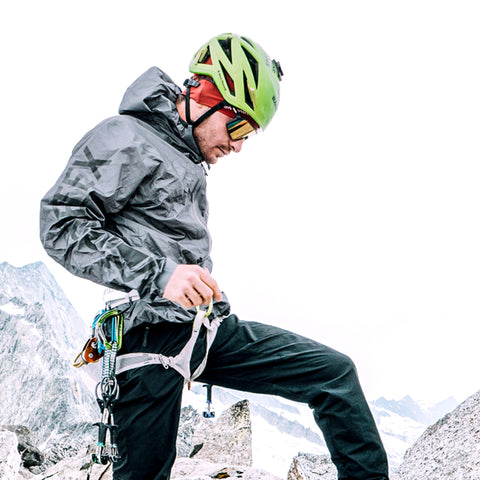
Then comes my Gore-Tex Pro shell, jacket and pants. In this case, it’s the BlackYak Global Athlete Edition, which isn’t commercially available, but comparable performance exists in our high-end Gore-Tex Pro line.
Visibility matters here. In winter, contrast is everything. You can go all black and stand out against snow, or go bright like I do here. Bright colors immediately signal “human” which adds a layer of safety in big terrain.
Gloves
For climbing, I use thin and waterproof Hestra gloves. Ice climbing is all about connection, and that connection runs through your gloves into your tools. Thinner gloves give you better feedback.
In my pack, I carry a warm backup pair like the LEKI Xplore XT 3D gloves, because as soon as you stop moving -> like during a rappel, warm hands become critical.
Footwear & Crampons
I climb in the Scarpa Phantom 6000. It’s a heavy, high-altitude boot, but I like warm feet, and I like training with weight. It also builds familiarity for bigger expeditions.
Inside, I wear thick TekoEcoTrek wool socks to create a snug fit. Unlike high-altitude climbing, where you want air insulation, here I want precision and contact.
For crampons, I use the Petzl Lynx crampons in mono-point configuration. On technical terrain, mono points are simply more precise. You can place them exactly where you need them, especially on mixed ground.
Head, Eyes & Accessories
- Thin BlackYak headband for warmth without blocking hearing
- Julbo EDGE sunglasses (category 3, interchangeable lenses)
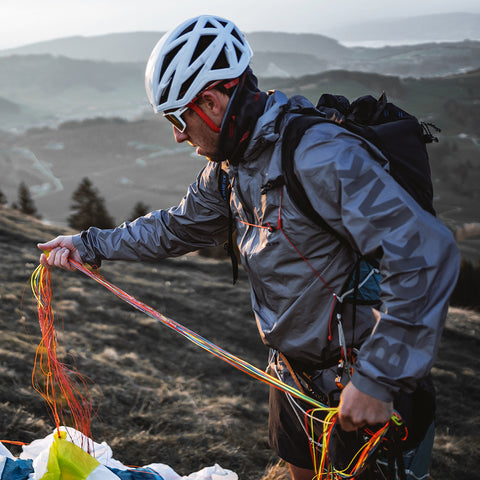
- Edelrid helmet for protection from falling ice
- BlackYak Gurla merino neck gaiter
- Amazfit T-Rex Ultra 2 watch
Even while soloing, I always wear a helmet. Ice falls. That’s just part of the environment.
Climbing Tools
I use the Petzl NOMIC ice tools. They’re not the lightest, but they feel right in my hands. That’s what matters. The connection between hand and tool defines how well you climb.
4. Backpack System / Emergency, Descent & Efficiency
Everything I need to get down safely sits in my AlpinistLab 25L AlpinistPack. Inside, I carry:
- Petzl RAD LINE 6mm rope
- 60m Mammut 8mm dry half rope
- Petzl ATTACHE carabiners (2x)
- Blue Ice Aero Lite ice screw (16cm)
- Petzl MULTIHOOK
- Sterling Hollow Block
- Spare gloves
- BlackYak Tilicho down jacket
This setup allows me to rappel a full 60 meters if needed and improvise anchors. It’s not meant to be comfortable; it’s meant to be sufficient.
5. The Bigger Picture / Training, Equipment & Progress
When I train for free solo ice climbing, I’m very conscious about staying in what I call the orange zone. Not fully comfortable, not overwhelmed by fear, but in a state where my nervous system is activated and I’m fully in control. That’s where growth happens.
And that’s also where I test gear, gear that has already proven itself. Prototypes are a different story. They only come into serious use if they’re built by a team I trust.
Because in the end, this is about three things evolving together: the body, the mind, and the equipment. That’s why I’m so involved in development with BlackYak. The goal is always the same: to create equipment that disappears, that becomes part of you, so you can focus entirely on the experience. Because that’s what this is really about.
Packing List
Approach Gear (To Reach the Climb)
- Ski/approach poles: LEKI Sky Solo model - carbon fibre, foldable, combines ski and trail running pole functionality
- Approach shoes: Scarpa Ribelle Tech 3 - lightweight, nimble, waterproof for snow approach
- Extra socks: Thin Merino socks for a dry, warm change before climbing
Preparation (Before the Climb)
- Foam mattress: Thermarest Z-Lite - to sit and relax before climbing
- Music & headphones: Wireless Beats headphones, long battery life
- Music track: “Dreams” by Will Ferrell - calming for the nervous system
- Thermos: Original Thermos, filled with hot fruit tea (no caffeine)
- Stretch band: Pull-up and dip stretch band (for warming up shoulders)
Free Solo Climb – Gear Worn on the Route
Base Layers (Closest to Skin)
- Short, tight-fitting merino underwear
-
Blackyak GURLA Merino Pants and GURLA Merino Shirt
Mid Layers
Shell Layer
Gloves
- Hestra Ergo Grip Delta HDry 5-finger - maximize grip on ice tools while being waterproof
Footwear
- Scarpa Phantom 6000 mountaineering boots (warm, high-altitude style)
- TekoEcoTrek - Thick wool socks (for snug fit inside boots)
- Petzl Lynx crampons (mono points in front)
Head & Eyes
- BlackYak Thin Headband (protects ears while keeping hearing clear)
- BlackYak GURLA Merino neck gaiter
- Edelrid helmet
- Julbo EDGE sunglasses with magnetic, exchangeable lenses, category 3
Watch/Smart Device
Climbing Tools
Backpack
- AlpinistLab 25L+ AlpinistPack
- 2 Petzl Attache carabiners
- BlueIce 16cm mid-range Ice screw (for emergency improvisation)
- Petzl Multihook / V-thread tool (for emergency improvisation)
- Sterling Hollow block (American prusik-style device for rappelling, aramid, heat-resistant)
- LEKI XPLORE XT 3DSpare warm gloves
- Blackyak TILICHO down jacket (worn over Gore-Tex layer for extra warmth on descent)